

Ourika Valley from Marrakech is a day trip into the High Atlas, following the Ourika River southeast of the city. Setti Fatma, at the end of the paved valley road, offers a waterfall walk, footbridges, riverside restaurants, and local stalls. The guide to getting around Marrakech covers local transport around the city.
- The valley lies along the Ourika River in Morocco’s High Atlas.
- Setti Fatma is about 60–65 km from Marrakech, at roughly 1,500 m elevation.
- The drive from Marrakech to Setti Fatma is estimated at about 1 to 1 hour 30 minutes, depending on traffic and stops.
- Access to Setti Fatma village is free; parking, food, guides, and shopping may cost money.
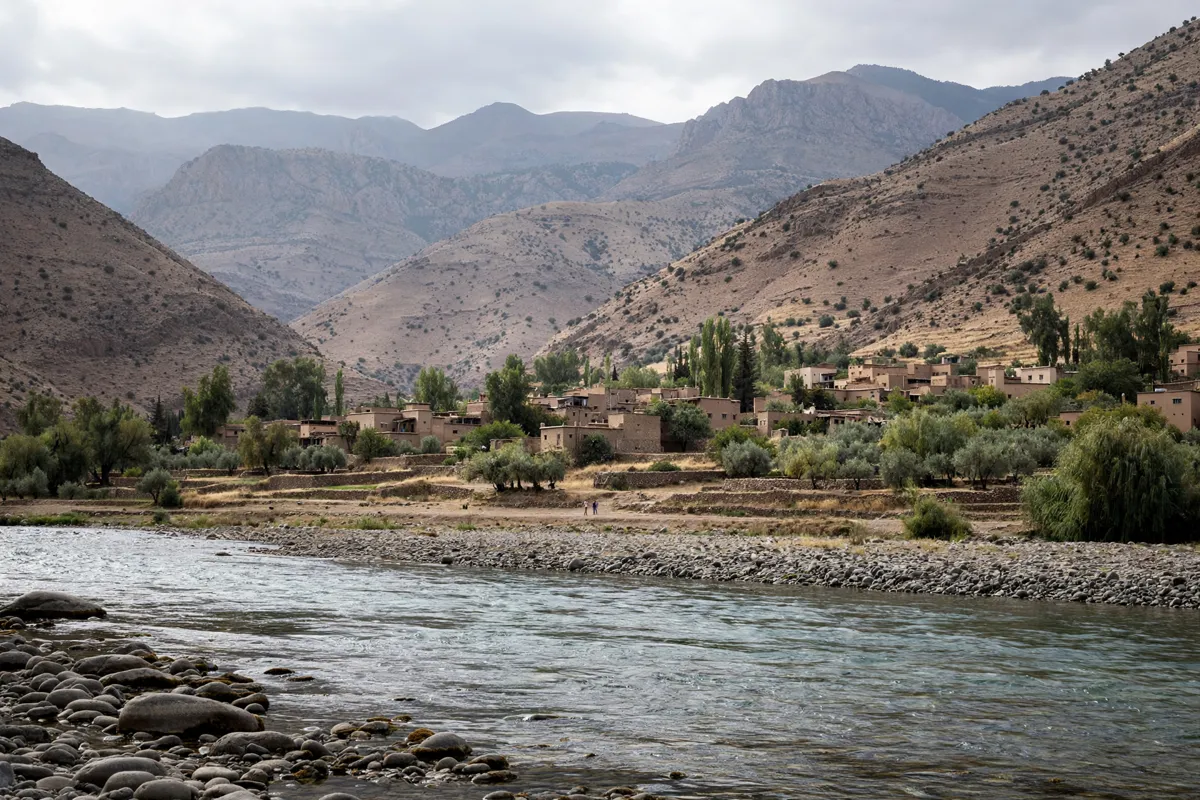
What to expect in Ourika Valley
Ourika Valley combines a mountain-road journey with time by the river and, if you continue to Setti Fatma, a walk toward waterfalls. The village sits at the end of the paved road, so it makes a clear turnaround point for a day trip.
In Setti Fatma, you can cross footbridges, browse local stalls, and eat at riverside restaurants. The walk to the first waterfalls and back takes about one to one and a half hours; allow two to four hours in the village if you also plan to eat and spend time there.
How do you get from Marrakech to Ourika Valley?
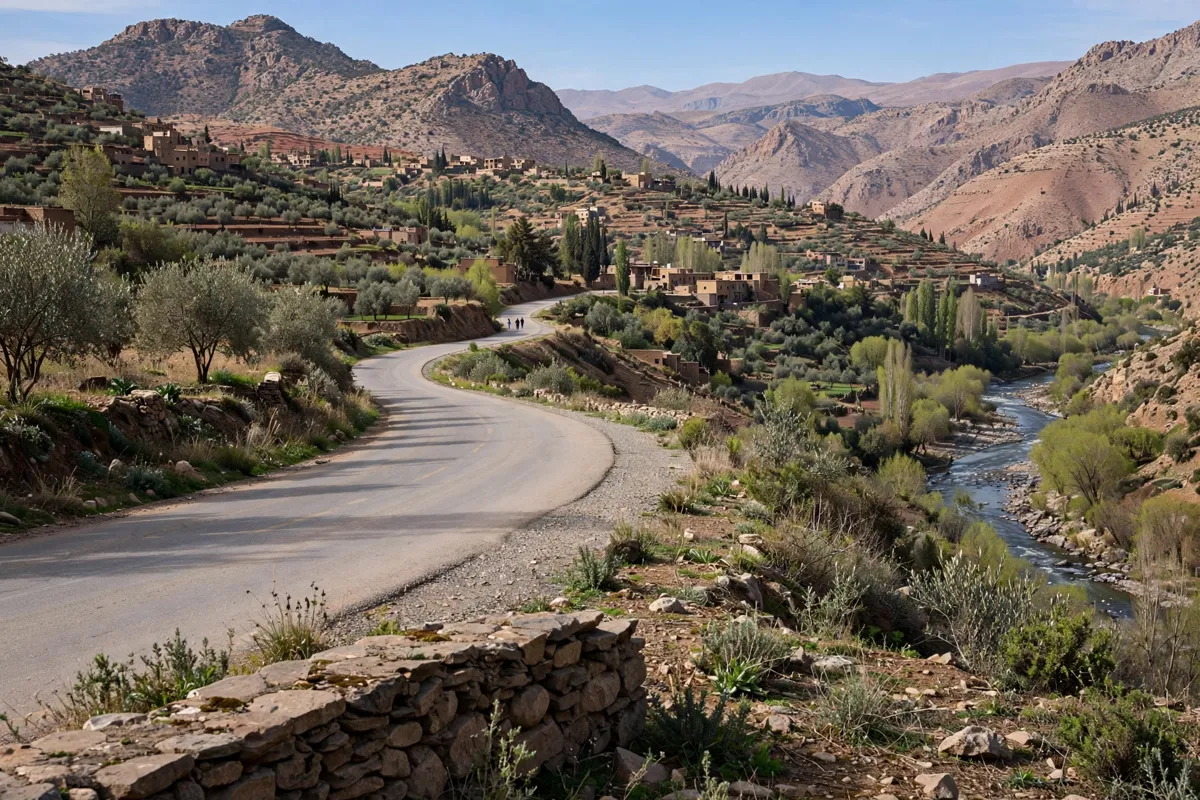
You can reach Setti Fatma by shared grand taxi, rental car, or private driver. The road journey from Marrakech takes about 1 to 1 hour 30 minutes, depending on traffic and stops.
From Zalagh Kasbah Hotel & Spa, a four-star hotel, the valley is about 49.7 km away.
Public transport can take you part of the way, but not all the way to the village. ALSA city bus line 25 runs from the Sidi Mimoun area of Marrakech to Tnine Ourika; from there, shared taxis or minibuses toward Setti Fatma depart as they fill. Check current services before relying on this connection.
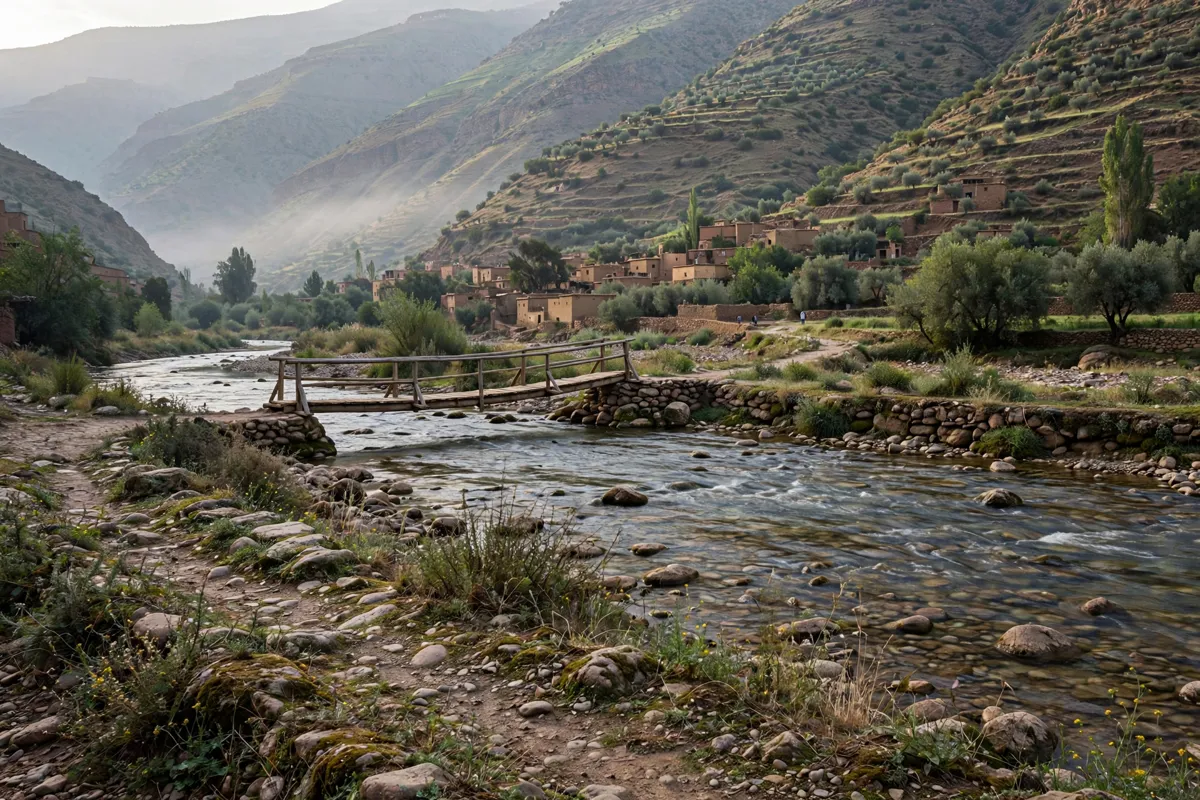
Choosing stops along the valley
Setti Fatma is the main stop described for the upper valley: you can combine the waterfall walk with lunch and time in the village. The route is unmanaged and unlit, so plan to walk in daylight.
If your day falls on a Monday, Tnine Ourika’s market is held that day. This can give you a different stop on the way through the valley; leave enough time for the onward journey to Setti Fatma if you plan to visit both.
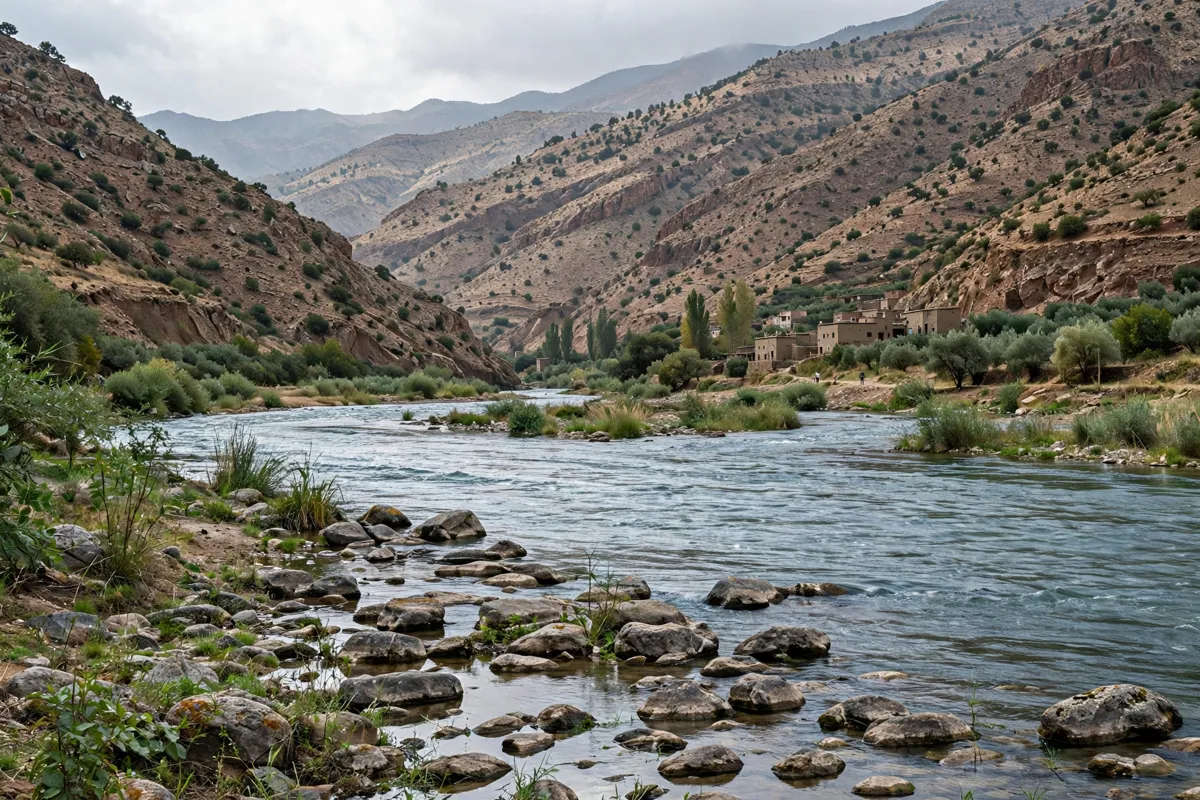
Seasonal conditions and access
Mountain weather can change the safety of a valley visit, particularly during heavy rain. The U.K. government warns that mountain roads can be especially hazardous in poor weather and advises following local authorities’ instructions during floods.
The U.S. State Department describes Morocco’s mountain roads as steep, narrow, and winding, and says flash flooding is frequent during the rainy season from November to March.
Heavy rain can cause flash flooding near rivers and in mountainous areas. Monitor local media and follow local authorities’ instructions if flooding occurs. For seasonal planning in the city, the Marrakech weather and seasonal guide offers context for your wider trip.
What to confirm before departure
There is no ticket office or published opening schedule for the valley and waterfall area. Confirm local access and road conditions before setting out, and check the official site before you go. Carry cash in dirhams: cash machines are rare beyond Tnine Ourika, and you may need money for parking, food, guides, or shopping.
Keep the waterfall walk to daylight and allow time for the return drive. If you are using shared transport, remember that onward taxis and minibuses leave when full, so the wait can affect your schedule.
FAQs
Is an Ourika Valley day trip possible from Marrakech?
Yes. Setti Fatma can be reached by road from Marrakech, and the drive is estimated at about 1 to 1 hour 30 minutes each way, depending on traffic and stops.
How long should you allow in Setti Fatma?
Allow two to four hours for the waterfall walk, lunch, and time in the village. The walk to the first waterfalls and back takes about one to one and a half hours.
Do you need a ticket to visit Setti Fatma?
Access to the village is free, but parking, food, guides, and shopping may cost money. There is no ticket office or published opening schedule for the valley and waterfall area.